Key Takeaways
- Garden arbors are decorative and functional additions that enhance the vitality of outdoor areas.
- They provide sturdy frameworks for climbing plants and help define visually appealing garden sections.
- Arbors establish clear focal points while influencing the ambiance and usability of your yard.
- Selecting quality materials and appropriate designs is crucial to longevity and beauty.
- Regular upkeep and thoughtful planting maximize the benefits and lifespan of your arbor.
Outdoor spaces often serve as an extension of the home, offering a place to relax, entertain, and reconnect with nature. Thoughtful landscape features can significantly enhance both the visual appeal and functionality of a garden. Among these features, garden arbors stand out as timeless structures that add height, character, and a sense of entry to outdoor areas. Whether placed along a pathway, at the entrance of a garden, or within a quiet corner, arbors create a welcoming focal point that encourages people to slow down and enjoy the surrounding greenery.
Beyond their structural beauty, garden arbors also support climbing plants that soften the space and add natural charm. An arbor Grapevine, for example, can weave gracefully along the framework, creating a shaded canopy while introducing texture and seasonal interest. As vines grow and intertwine with the structure, the arbor evolves into a living architectural feature, blending design with nature. This combination of structure and greenery helps transform ordinary yards into elegant outdoor retreats that feel both inviting and serene.
Benefits of Garden Arbors
Garden arbors offer more than visual charm; they provide tangible benefits that enhance the livability and enjoyment of an outdoor space.
- Define Spaces: Strategically placed arbors can create passageways and gateways, or divide the garden into themed zones. This assists with flow and gives each area a distinct personality.
- Support Plant Growth: Garden arbors provide sturdy structures for climbing plants such as honeysuckle, clematis, and other vines. This vertical gardening boosts interest and is ideal for small yards or those seeking layered beauty.
- Create Focal Points: A well-placed arbor draws attention and offers an opportunity to highlight a specific area. It might frame a scenic view, introduce a new garden path, or showcase other landscape elements.
- Offer Shade and Shelter: When topped with leafy vines or flowers, arbors can shield users from the afternoon sun and offer a cool, secluded space for meditation or a quiet cup of coffee.
Choosing the Right Arbor for Your Space
Choosing the right arbor for your outdoor space involves balancing aesthetics with practical considerations. The size and scale of the arbor should complement its surroundings, enhancing the garden without overwhelming nearby features or appearing too small to make an impact. Style is another important factor; traditional arched arbors can evoke a timeless, romantic atmosphere, while modern designs provide a clean, minimalist look that suits contemporary landscapes. It is also helpful to consider the arbor’s primary purpose: whether it will create a striking garden entrance, serve as a peaceful resting spot, or provide support for climbing plants, blossoms, and vines. Considering how the arbor interacts with other elements, such as pathways, seating areas, or surrounding greenery, can further enhance its charm and help create a cohesive, inviting outdoor environment.
Materials and Design Considerations
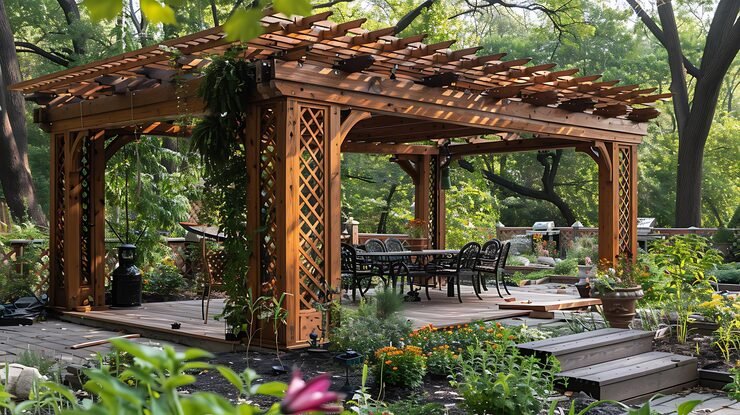
Choosing appropriate materials and design is essential to ensure your arbor enhances your outdoor space’s appearance and aligns with your maintenance preferences. Wood, admired for its charm and warmth, includes cedar and redwood, which are resistant to rot and insects but require regular sealing and cleaning. Metal options such as aluminum or wrought iron offer durability and a contemporary look, though some rust prevention may be needed. Vinyl is low-maintenance, weather- and fade-resistant, though it lacks natural character. Design elements such as lattice panels, curved tops, or scrollwork add style. Considering the upkeep and how the arbor complements your garden’s aesthetic helps create an attractive and harmonious feature.
Incorporating Climbing Plants
Climbing plants are the secret to turning arbors into dramatic focal points bursting with life. Excellent choices include:
- Roses: Classic climbing or rambling roses create lush and fragrant displays ideal for a welcoming entryway.
- Clematis: With a variety of colorful blooms and a long flowering period, clematis can quickly cover an arbor and provide vivid interest.
- Wisteria: Ideal for a romantic garden, the heavy, cascading blossoms of wisteria deliver exquisite texture and scent in spring and summer.
Consider your plants’ growth patterns and light requirements to ensure they thrive. Pairing arbors with native climbing species can boost pollinator activity and simplify care.
Creating Functional Spaces with Arbors
A garden arbor’s design potential is vast. Installed at a garden entrance, an arbor signals a boundary or transition between garden zones, adding a sense of journey and intrigue. An arbor set over a bistro table or bench draws the eye to a dedicated “room” for reading, conversation, or relaxation.
Add lights or hang lanterns for an enchanting evening ambiance, or consider incorporating seating to extend your outdoor space’s use year-round. Creative approaches ensure that your arbor serves as a destination as much as a path marker.
Maintenance Tips for Longevity
Consistent care protects your investment and keeps your garden arbor looking pristine over the years:
- Cleaning:Remove leaves, moss, and dirt to prevent moisture buildup that can cause decay or corrosion.
- Inspect for Damage:Perform seasonal checks for cracks, loose fasteners, or signs of rust. Prompt repairs reduce more serious issues down the road.
- Paint or Seal:Repeat painting or sealing as needed to maintain weather resistance, especially with wood arbors.
- Prune Vines:Trim climbing plants regularly to maintain healthy growth and prevent structures from becoming overwhelmed or unbalanced.
Conclusion
Garden arbors offer an effortless blend of artistry and function. With thoughtful planning, material selection, and steady care, you can transform even a basic outdoor area into a tranquil retreat that invites relaxation, creativity, and joy. Their enduring appeal makes them a timeless addition to any landscape, providing a welcoming, visually captivating sanctuary for years to come.